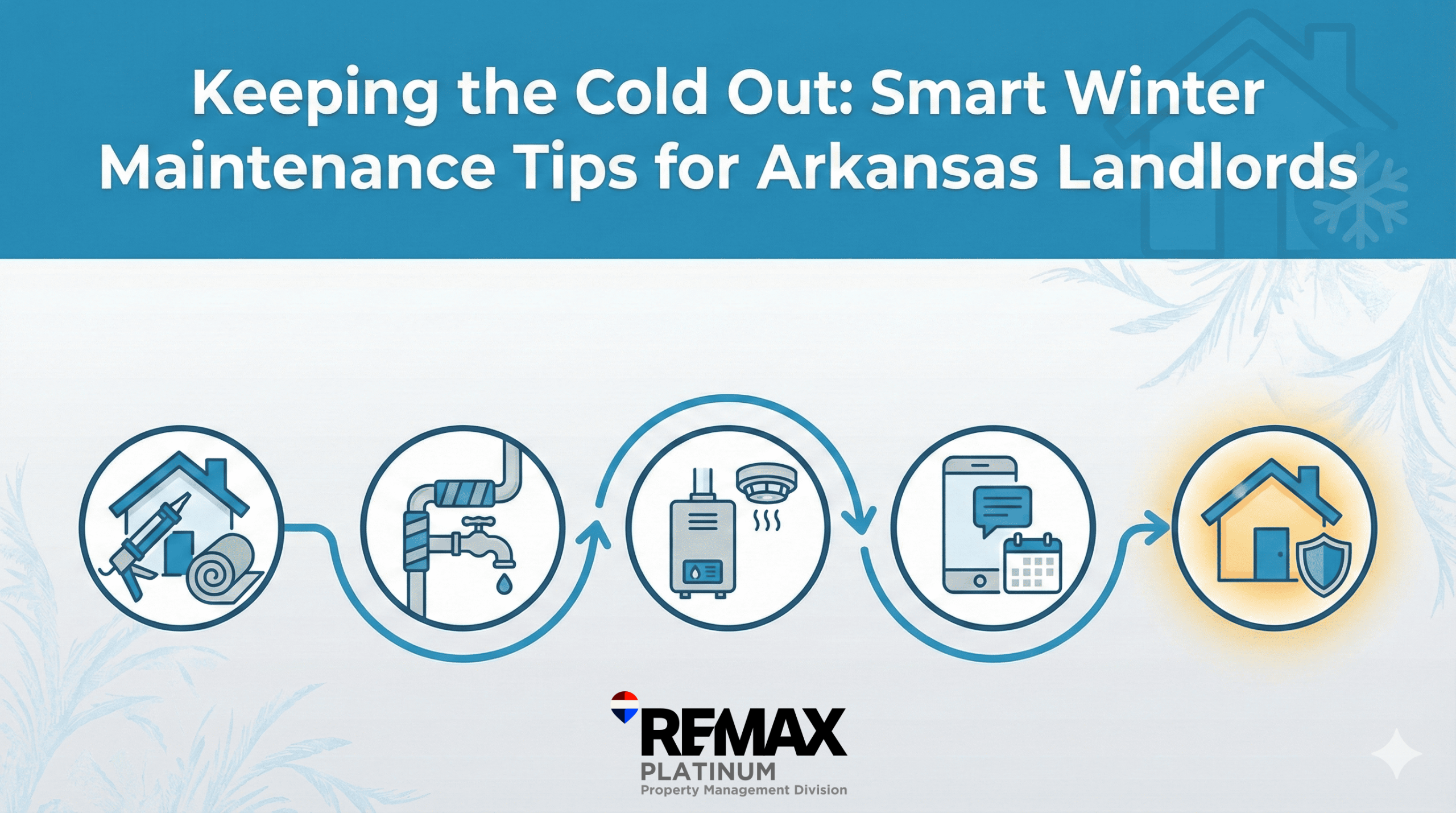
Arkansas winters don’t always roar in the same way twice. One year it’s mild jacket weather, the next it feels like the cold is sneaking under every door frame. That unpredictability is exactly why rental property maintenance in Arkansas becomes a season-long mindset rather than a single checklist item.
When a home is winter-ready, landlords avoid frantic repair calls, tenants stay comfortable, and surprise expenses shrink. And honestly, winter goes a lot smoother when the prep work isn’t an afterthought.
Start With the Basics: Seal, Insulate, Inspect
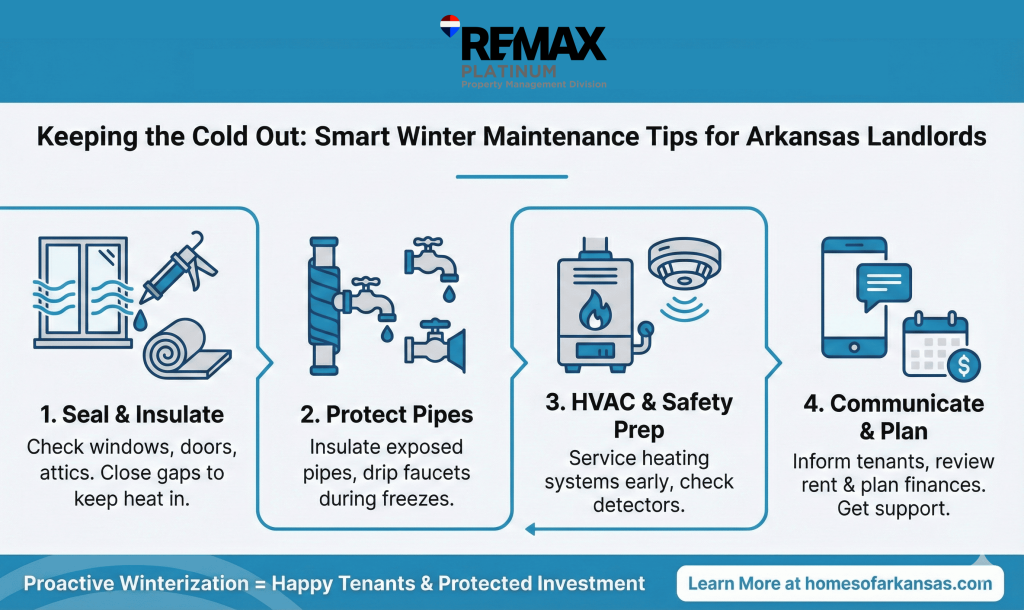
Small gaps can turn into big heating losses. Before cold nights settle in, take a slow walk around the property.
Run your hand along window frames and door edges. If you feel air moving, it’s time for weather stripping or fresh caulk. These tiny fixes make a noticeable difference in utility costs and tenant comfort.
Attics and basements deserve a peek too. Insulation settles over time, and thin spots can force heating systems to work overtime. Many landlords overlook this step, but it’s one of the most practical landlord maintenance tips you can implement heading into winter.
Pipes: The One Thing You Don’t Want Freezing
A frozen pipe is the kind of problem that escalates from “small inconvenience” to “full chaos” surprisingly fast. Insulate exposed pipes, especially in crawl spaces or exterior walls, and shut off outdoor spigots before temperatures dip.
If temperatures plummet, a slow drip from the faucets can prevent freezing. Tenants usually appreciate a reminder about this, especially those new to colder climates. It keeps everyone on the same page and lowers the risk of emergency repairs.
While communicating winter instructions, some landlords also use the moment to reinforce expectations that help avoid bigger issues. Conversations like these often help reduce the types of situations described in ghost-tenant and scary-lease problems.
Heating Systems Need Attention Before the Cold Arrives
A furnace failing in January is not only inconvenient, it’s expensive. Schedule HVAC servicing early and replace filters so the system can run efficiently throughout winter.
If you work with a property manager, they often handle these routine seasonal inspections automatically. It’s one of the quieter benefits of professional oversight, especially when you’re juggling several tasks at once.
And while you’re already in safety mode, check smoke detectors and carbon monoxide detectors. Cold months mean closed windows and more indoor heating, so these systems matter more now than at any other time of year.
Outdoor Maintenance Still Matters in Winter
Even when trees are bare and lawns look sleepy, outdoor upkeep plays a role in protecting your investment.
Clear gutters before the first freeze to prevent ice buildup. Trim any limbs hanging a little too close to the roof. Sweep away leaves that trap moisture around doorways or exterior structures.
These tasks don’t just improve curb appeal. They reduce long-term repair costs and keep tenants feeling safe and cared for, even when no one’s spending much time outside.
Keep Tenants in the Loop With Seasonal Expectations
Most winter issues aren’t the result of a single catastrophic event. They’re usually the result of small problems no one mentioned until they grew. Clear communication helps blunt those surprises.
A simple seasonal reminder outlining what you handle and what tenants should watch for can prevent unnecessary stress. Reporting leaks early, maintaining minimum indoor temperatures, and knowing how to shut off the water in an emergency all matter.
This type of communication also reduces misunderstandings that turn into maintenance delays or disputes. Many landlords find that good communication reinforces stability and reduces the kinds of issues seen in tenant behavior challenges that property managers often uncover during detailed screening processes.
Think Beyond Winter: Pricing, Planning, and Profitability
Winter is also a great time to reevaluate the financial health of your rental. Seasonal expenses sometimes shift the math more than landlords expect.
A quick rent review ensures your pricing still reflects the market and the cost of keeping a home in good condition year-round. Some property owners only make small adjustments, but even minor updates can help avoid the long-term loss patterns described in common underpricing problems that Pine Bluff landlords often overlook when setting rent.
Staying proactive keeps your investment sustainable, not just functional.
When Winter Feels Like Too Much, Bring in Support
Seasonal maintenance is manageable, but coordinating everything consistently can be a lot, especially if you’re overseeing multiple properties or juggling repairs with a busy schedule.
Property managers are built for this kind of seasonal predictability. They coordinate inspections, hire qualified vendors, streamline communication, and help prevent emergencies long before they happen.
Wrapping Up the Season
Winter doesn’t have to be stressful. A mix of inspections, preventive care, and good communication goes a long way toward protecting your rental and keeping tenants warm and secure.
At ReMAX Platinum Property Management Division, we help Arkansas landlords take a proactive approach that feels steady rather than reactive. If you want winter to run smoother this year, visit us at homesofarkansas.com and explore how we support reliable, year-round rental performance.
FAQs
1. When should landlords start winterizing rentals in Arkansas?
A: Late October through early November works best, before freezing temperatures become consistent.
2. What helps prevent frozen pipes?
A: Insulation, shutting off exterior water lines, and reminding tenants to drip faucets on freezing nights.
3. Why is HVAC maintenance important in winter?
A: A serviced system runs more efficiently and reduces the risk of mid-season breakdowns.
4. Do property managers handle winter maintenance tasks?
A: Yes. Many coordinate inspections, repairs, and preventive services throughout the season.
5. Should landlords review rent prices in winter?
A: Definitely. Seasonal costs can affect profitability, and periodic rent evaluation keeps your numbers aligned with market conditions.

