There is a quiet truth about rental properties that rarely gets enough attention.
Finding a tenant is not the hard part.
Keeping a good tenant is.
Many landlords focus heavily on marketing and screening. Those steps matter, of course. But long-term profitability often depends less on who signs the lease and more on what happens after they move in.
Tenant retention in South Arkansas is not just a feel-good concept. It is one of the most practical ways to protect income and reduce risk in the Pine Bluff rental market.
Why keeping tenants matters more than replacing them
On paper, a lease renewal looks ordinary. No dramatic event. No big announcement. Just paperwork and signatures.
Financially, though, it can be one of the most important moments of the year.
When a tenant leaves, costs begin immediately. Cleaning. Repairs. Marketing. Screening. Lost rent during vacancy. Even in a steady market, one empty month can erase much of the previous year’s gains.
To reduce vacancies in Pine Bluff, the goal should not always be filling empty homes faster. Sometimes the smarter move is preventing them from becoming empty at all.
Retention is less exciting than acquisition. But it is often more profitable.
What actually makes tenants stay
There is a common assumption that tenants move primarily for price reasons. Rent increases, higher utility costs, better deals elsewhere.
Sometimes that is true.
But many renters leave because of frustration. Slow maintenance responses. Poor communication. Unclear policies. Feeling ignored when issues arise.
Tenants want predictability. They want to know repairs will be handled. They want clear expectations. They want to feel that the property is managed professionally, even if the rent is not the lowest in town.
This is where property management benefits become visible in practical ways. Professional systems reduce confusion. Maintenance requests are tracked. Communication is documented. Follow-ups happen.
Consistency builds trust. Trust encourages renewals.
Maintenance is not just a repair issue
In South Arkansas, weather and aging properties create ongoing maintenance needs. HVAC systems struggle during peak summer heat. Plumbing issues surface in older homes. Roofing problems appear after heavy storms.
When maintenance is delayed or handled inconsistently, tenants feel it quickly.
Proactive property management addresses small problems before they become large ones. Regular inspections, preventative servicing, and fast repair coordination show tenants that the property is cared for.
A well-maintained home does more than preserve value. It builds confidence.
And confident tenants tend to stay.
Communication shapes perception
Two properties can offer identical layouts, similar rent, and comparable amenities. Yet one experiences frequent turnover while the other sees steady renewals.
Often the difference is communication.
Clear lease explanations at move-in. Timely reminders about upcoming renewals. Transparent processes for maintenance requests. Straightforward handling of concerns.
These details may sound minor. They are not.
Tenants who feel informed are less likely to become frustrated. Even when issues arise, respectful communication often prevents escalation.
For landlords focused on tenant retention in South Arkansas, communication is not optional. It is foundational.
Pricing renewals carefully
There is another layer to retention that requires balance.
Rent increases are sometimes necessary. Taxes rise. Insurance costs change. Maintenance expenses grow. Ignoring those realities hurts long-term returns.
At the same time, aggressive increases can push reliable tenants to explore other options.
The Pine Bluff rental market does not typically reward dramatic rent jumps. Incremental adjustments aligned with local demand tend to perform better.
Experienced property managers evaluate market data before recommending renewal pricing. They consider comparable properties, current vacancy trends, and tenant payment history. The goal is not just maximizing rent for one year. It is sustaining occupancy over multiple years.
Small, thoughtful adjustments often outperform bold moves.
How retention directly impacts profitability
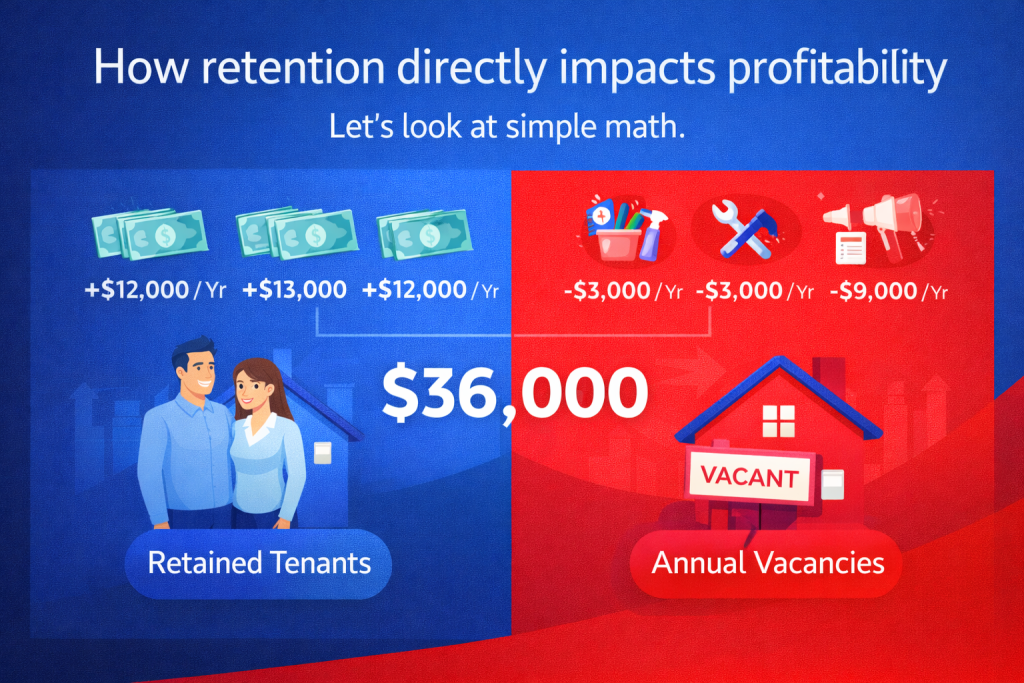
Let’s look at simple math.
Assume a rental generates $1,000 per month. If a tenant stays for three consecutive years, that produces $36,000 in gross rent, with minimal turnover costs.
If that same property experiences a vacancy every year, even just one month, that is $3,000 lost over three years. Add cleaning, minor repairs, and marketing expenses, and the gap widens further.
Retention reduces those disruptions.
To reduce vacancies in Pine Bluff, landlords should think less about constant replacement and more about creating an experience that tenants do not want to leave.
Screening still matters
Retention begins long before renewal season.
Placing the right tenant initially is one of the strongest predictors of long-term occupancy. Applicants with stable income, consistent rental history, and realistic expectations tend to renew more often.
Property managers understand this connection. Screening is not only about avoiding risk. It is about identifying tenants who are likely to stay, communicate, and maintain the property responsibly.
That upfront diligence supports retention later.
Stability benefits both sides
Happy tenants benefit landlords. But the reverse is also true.
Stable landlords benefit tenants.
When management is organized and predictable, tenants feel less anxious about sudden policy changes or inconsistent enforcement. They know what to expect. That stability encourages longer tenancies.
In the broader context of property management benefits, retention strengthens relationships, smooths cash flow, and reduces operational stress.
It is not dramatic. It is effective.
A realistic perspective
Not every tenant will renew. Life changes. Job relocations happen. Family situations evolve.
Retention strategies cannot prevent every move.
But they can reduce unnecessary turnover. They can transform average lease lengths into multi-year tenancies. They can shift a property from reactive management to proactive stability.
For landlords in South Arkansas, that shift often marks the difference between constantly chasing new renters and building steady, predictable income.
Why February is the right time to think about it
Early in the year, many landlords focus on new leases and new acquisitions. That makes sense.
But February is also a good time to review renewal processes. Evaluate communication systems. Assess maintenance response times. Consider whether current practices truly support tenant retention in South Arkansas.
Small operational improvements made early in the year compound over the months that follow.
Just like investments.
If you are looking for practical ways to reduce vacancies in Pine Bluff and strengthen long-term rental performance, we would be glad to help. At RE/MAX Platinum Property Management Division, we focus on the details that keep tenants satisfied and landlords profitable. Visit https://homesofarkansas.com/ to learn how we can support your rental property with a steady, professional approach.
FAQs
1. Why is tenant retention in South Arkansas important for landlords?
A: Retention reduces turnover costs, limits vacancy periods, and supports more predictable rental income.
2. How can landlords reduce vacancies in Pine Bluff?
A: By maintaining properties proactively, communicating clearly with tenants, and setting competitive renewal pricing.
3. What are the main property management benefits for retention?
A: Professional communication systems, maintenance coordination, and consistent lease enforcement all support longer tenancies.
4. Do rent increases always cause tenants to leave?
A: Not necessarily. Moderate increases aligned with market conditions often result in renewals when communication is clear.
5. Can property managers really improve tenant satisfaction?
A: Yes. Structured processes, faster response times, and predictable management practices often lead to higher renewal rates.

